
₹20,000 a month does not leave much room. Rent, food, a mobile recharge, the bus or metro, maybe some money for home, and suddenly it is the 25th and the account is nearly empty. Most saving advice online assumes a salary three times bigger. Telling someone on ₹20,000 to “save 20%” without showing how is not help.
Here is the honest answer: on a ₹20,000 in-hand salary, saving ₹2,000 a month is realistic if you live away from home, and ₹5,000 to ₹7,000 is possible if you live with family. The way to get there is not extreme cutting. It is to save first on salary day, stop a few small daily leaks, and keep a ₹1,000 to ₹1,500 buffer so one surprise does not wipe you out.
First, what you already save without noticing
If your employer deducts EPF, 12% of your basic pay goes into your PF account every month, and your employer adds its own contribution too. On a basic of ₹10,000, that is ₹1,200 from you alone. It is long-term money, but it is savings. Count it as a quiet win.
Also, at ₹20,000 a month you pay no income tax under the new regime. A resident individual with total income up to ₹12 lakh a year gets a full rebate, so there is no tax to plan around at this level. Every rupee you save is about spending, not tax.
Two realistic budgets for ₹20,000
Your situation changes everything. Someone sharing a room in Bengaluru or Pune has very different costs from someone living with parents in Indore or Lucknow. So here are two plans.
| Item (per month) | Shared room in a city | Living with family |
|---|---|---|
| Rent share or contribution at home | ₹5,500 | ₹5,000 |
| Food (mess, groceries, lunch at work) | ₹5,000 | ₹2,000 |
| Mobile recharge | ₹350 | ₹350 |
| Transport | ₹1,500 | ₹2,000 |
| Money sent home | ₹2,500 | ₹0 |
| Toiletries and personal | ₹800 | ₹1,500 |
| Eating out and OTT | ₹700 | ₹1,500 |
| Savings (RD or SIP, on salary day) | ₹2,000 | ₹7,000 |
| Buffer | ₹1,650 | ₹650 |
| Total | ₹20,000 | ₹20,000 |
In the first plan, savings are 10% of salary. In the second, 35%. Both are honest numbers. If you live away from home, do not compare yourself with a friend who lives with parents. Compare yourself with your own last month.
For a more general split, the 50-30-20 budget rule is a good reference, but at ₹20,000 in a city, needs often take 70% or more. That is normal. Start with whatever you can save and raise it with every increment.
Step 1: Save on salary day, not at month end
If you wait to see what is left on the 30th, the answer is almost always nothing. Instead, set up an auto-debit for a recurring deposit or a small SIP on the day after salary. Even ₹1,000 counts. Most banks let you open an RD from the app in a few minutes, starting at small amounts.
Put it in a place you cannot spend from with one tap. Money sitting in the same account as your UPI apps tends to disappear.
Step 2: Find your small leaks
On a small salary, big cuts are rarely possible. Rent is rent. But small daily payments add up faster than you think, and they are easy to miss because each one is ₹30 or ₹50. Here is a sample month:
| Small spend | Now | After a small change | Saved |
|---|---|---|---|
| Chai and snack, 22 workdays | ₹40 a day = ₹880 | ₹20 a day = ₹440 | ₹440 |
| Food delivery | 2 orders a week at ₹250 = ₹2,000 | 1 order a week = ₹1,000 | ₹1,000 |
| Subscription you rarely use | ₹199 | Cancelled = ₹0 | ₹199 |
| Total saved | ₹1,639 |
That is ₹1,639 a month, or ₹19,668 a year, from three small changes. Nobody is asking you to give up chai. Just know the number.
Step 3: See every payment in one place
You cannot fix a leak you cannot see. With UPI, payments are spread across PhonePe, Google Pay, Paytm and your bank app, plus some cash. The simple manual way: every night, open your SMS inbox, look at the bank debit messages for the day, and write them in a notebook with a category. It takes five minutes once it is a habit.
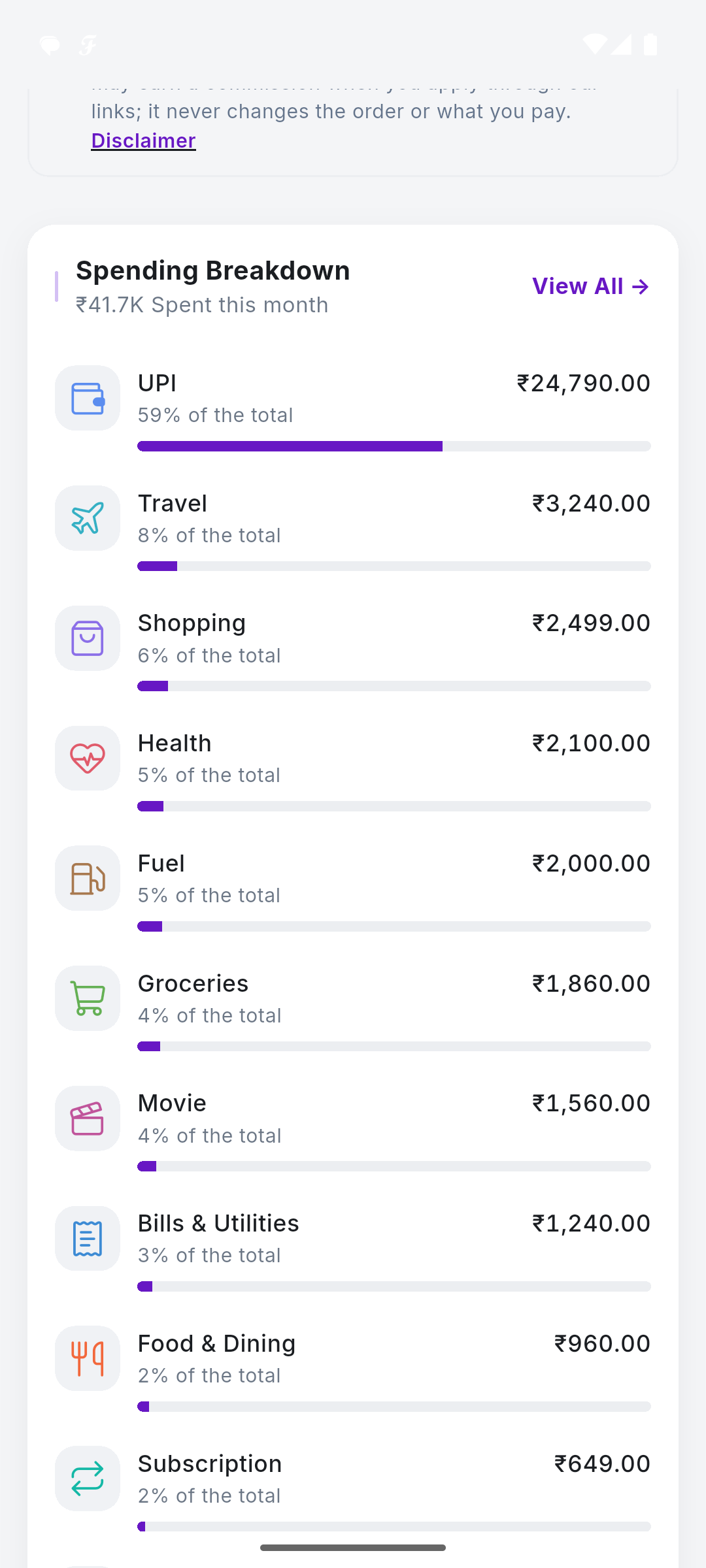
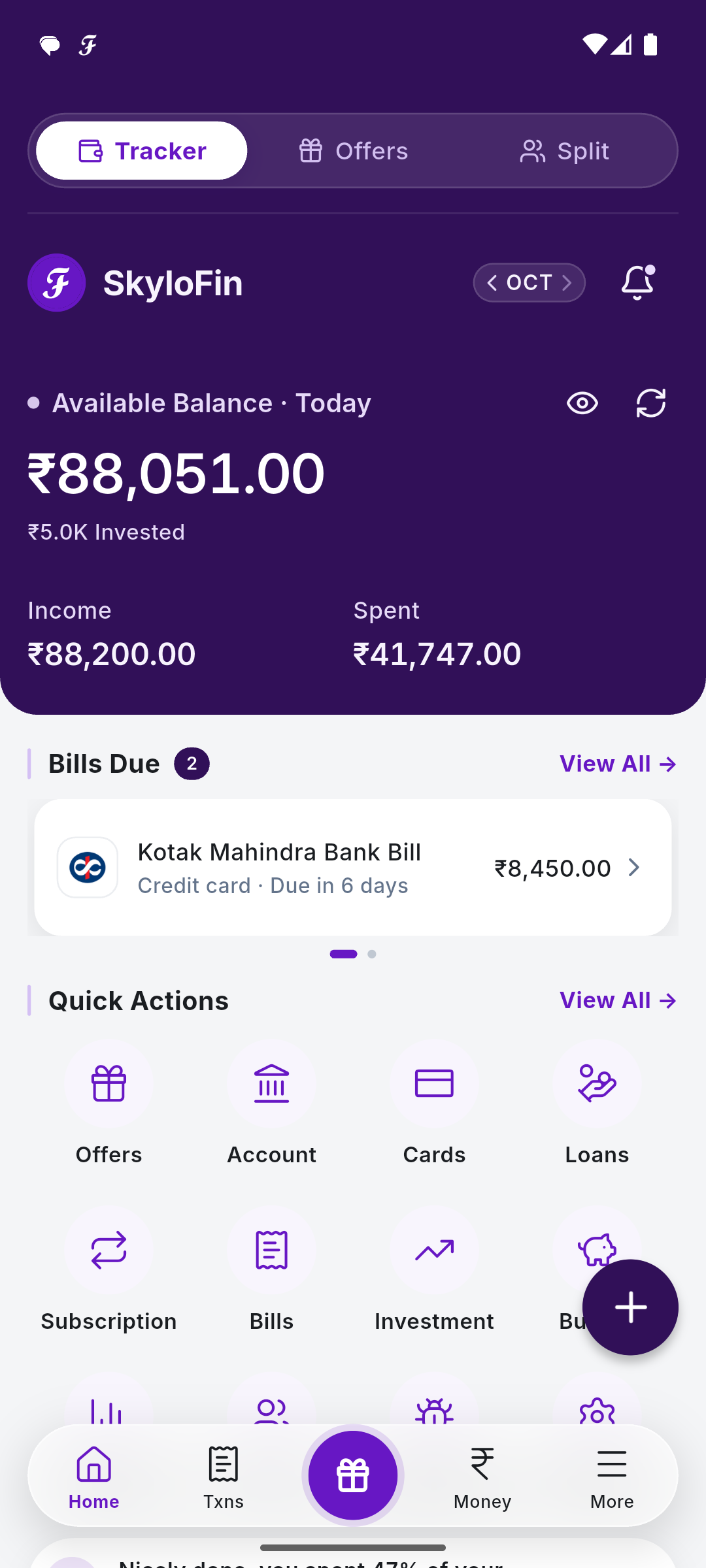
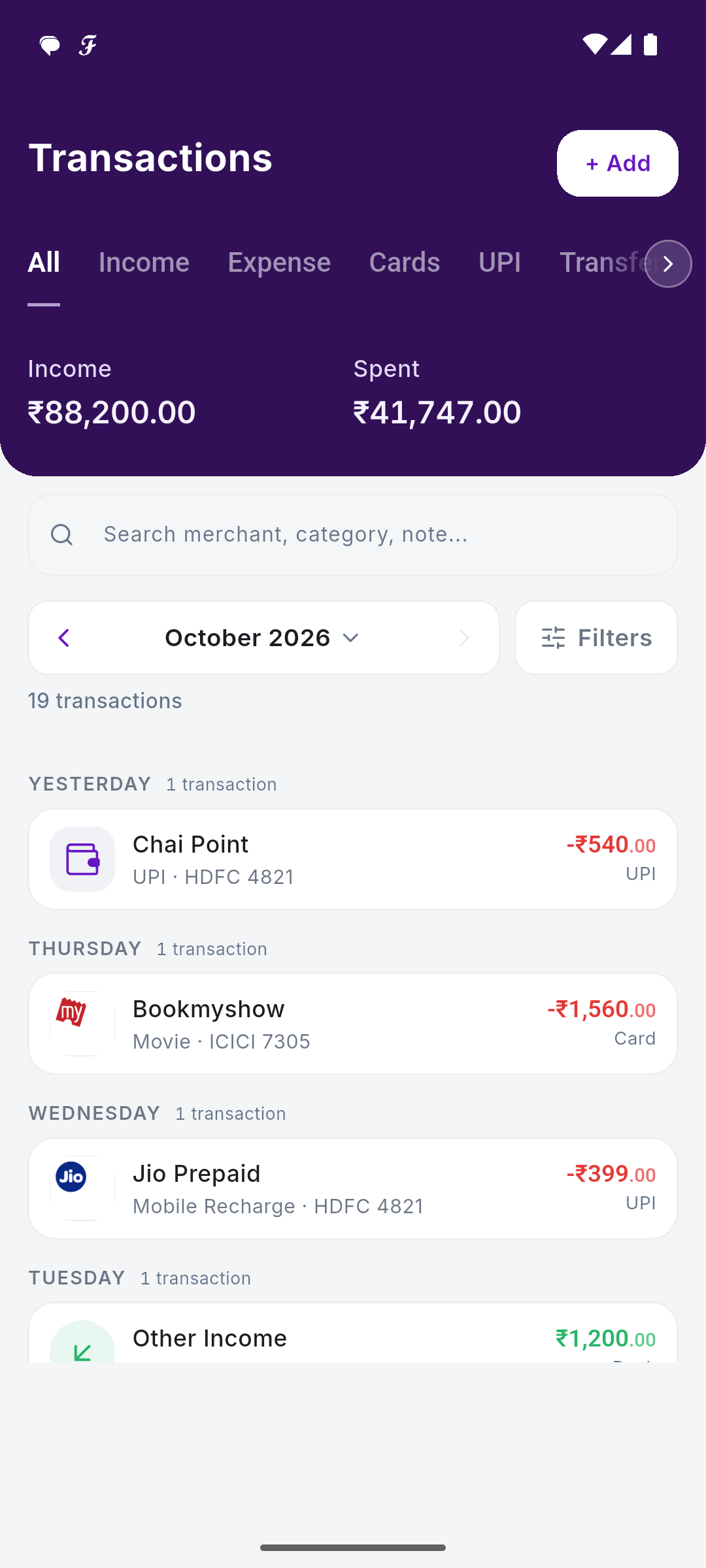
If that sounds like too much, SkyloFin can do it for you. It reads the bank SMS that every UPI and card payment sends, on your phone, and lists each transaction with the shop and a category. You add cash spends by hand. It is free on Android, with no ads and no bank login. Here is how SMS access works, and you can turn it off any time.
Once you can see the list, do a quick review every Sunday. Look for three things: payments you do not remember, the same shop showing up again and again, and anything over ₹500 that was not planned. Pick one to change next week. One change at a time is how habits stick.
Step 4: Build a small emergency fund before anything else
At this salary, the first goal is not investing. It is a cushion. Without one, a ₹6,000 phone repair or a train ticket home in an emergency goes on a credit card or a loan app, and the interest eats months of savings.
Target one month of expenses first, around ₹15,000 to ₹18,000. At ₹2,000 a month that takes about eight or nine months. Then aim for three months. Only after that, start a SIP for long-term goals.
Step 5: Avoid the traps that hit small salaries hardest
- Phone or gadget on EMI. A ₹2,500 EMI for 12 months is 12.5% of your salary for a full year. Save first and buy later if you can.
- Buy now, pay later and small loan apps. Easy to start, easy to roll over, expensive to clear.
- Credit card minimum due. Paying only the minimum keeps interest running on the rest. Read what the minimum due really costs.
- Lending money you cannot spare. It is fine to say no, or to give a smaller amount you can afford to lose.
How to grow from ₹2,000 to more
Saving more on ₹20,000 has a limit. Earning more does not. Each increment, raise your monthly savings by at least half the increase. If your salary goes up by ₹2,000, add ₹1,000 to your RD or SIP and enjoy the other ₹1,000. Over a few years, this adds up without ever feeling like a sacrifice.
Frequently asked questions
Is it possible to save on a ₹20,000 salary in a metro?
Yes, but expect a smaller amount, around ₹1,500 to ₹2,500 a month, if you pay rent. Sharing a room, cooking some meals and saving on salary day are the three biggest levers.
Where should I keep my savings?
For the emergency fund, a recurring deposit or a separate savings account works well because the money stays safe and easy to reach. Once you have three months saved, a small monthly SIP is an option for long-term goals.
Should I get a credit card on ₹20,000?
Only if you can pay the full bill every month. A card used carefully helps build a credit score; a card used to stretch the month makes things worse.
Do I need an app to track my spending?
No. A notebook or a free spreadsheet works. An app just saves the daily typing.
Small salaries need clear numbers the most. Get SkyloFin free on Android and see every UPI payment of the month in one list.
Last checked: October 2026.
Updated 13 Oct 2026.