Expense Tracking
How to Work Out Your Monthly Spending from Bank SMS
Search your inbox for debit SMS, drop transfers and card bill payments, then total by category. A worked example with real-life numbers.
Posts about money guides on the SkyloFin blog.
Search your inbox for debit SMS, drop transfers and card bill payments, then total by category. A worked example with real-life numbers.

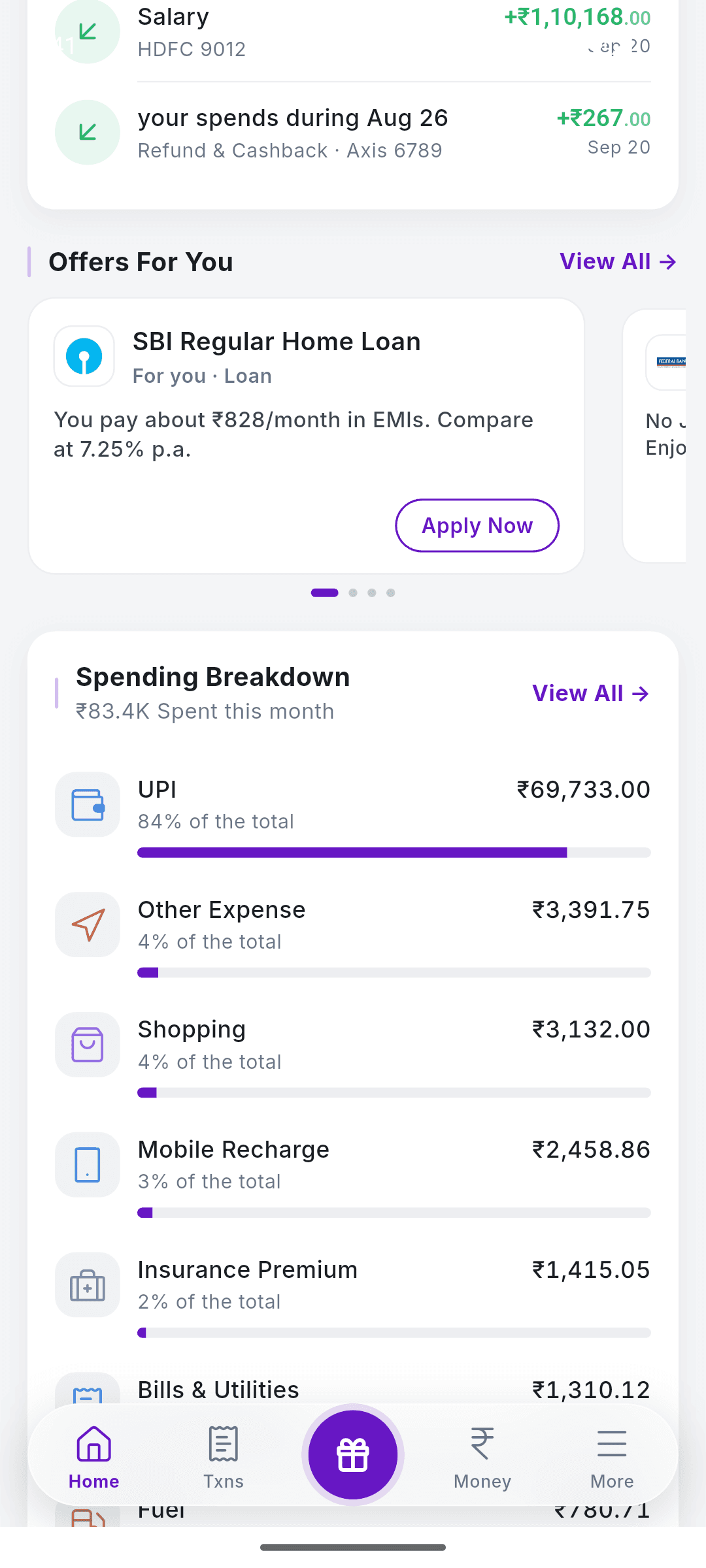
SMS expense trackers turn your bank alerts into a spending diary. How they read a message, what they miss, and how six apps compare.

Make a monthly budget in 5 steps: fixed costs, savings, variable spends, a buffer, weekly checks. With full budgets for ₹25,000 to ₹75,000 salaries.

Expense trackers work in three ways: you type, the app reads your bank SMS, or the app links to your bank. Here is what each one can see, where your data goes, and six questions to ask any money app.

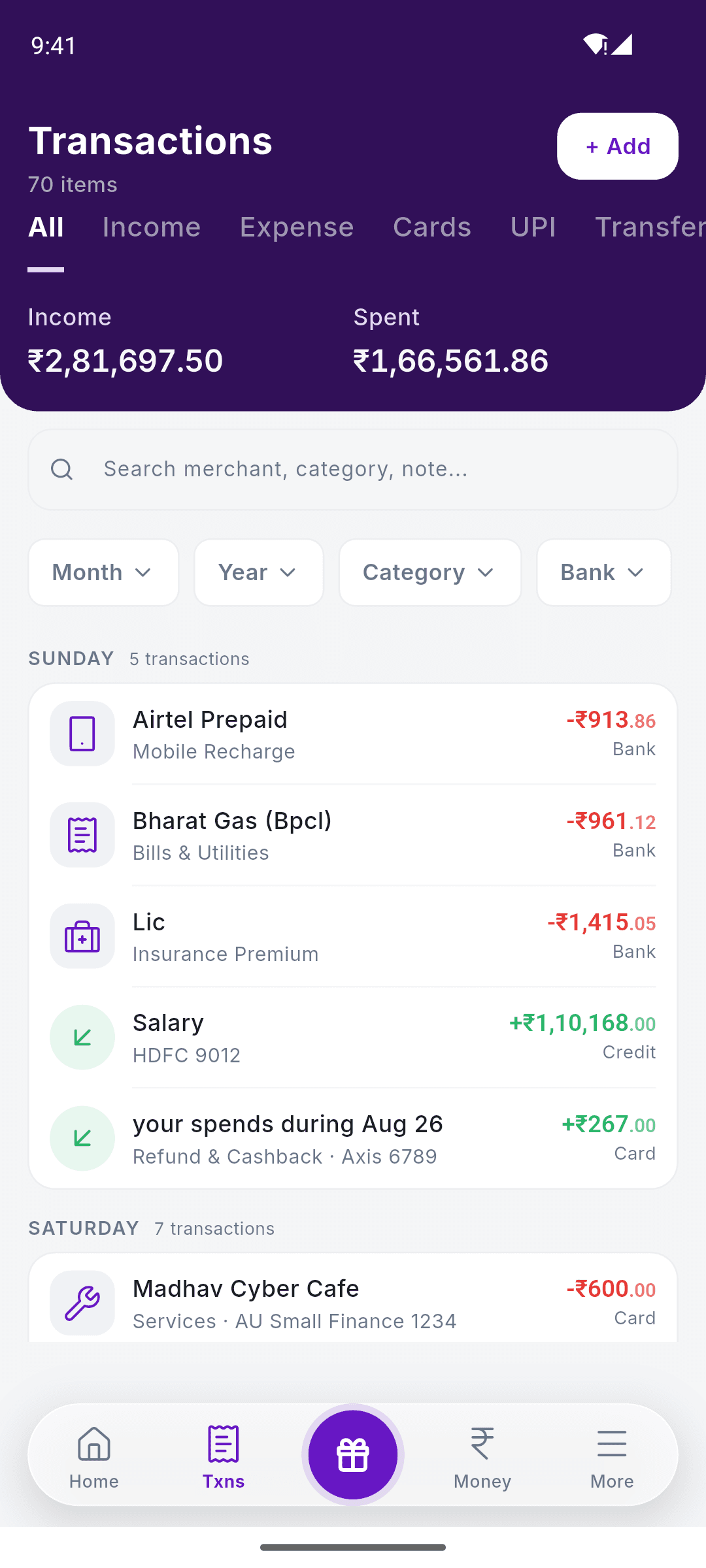
Every UPI payment already sends you a bank SMS. Here is how to turn those messages into an automatic expense log, plus a free manual method.

The best expense tracker is the one you keep using. We compare seven apps by how they fill themselves in, what they cost and where your data lives.

You can track spending without sharing a bank login. Here are free apps that use bank SMS or manual entry, and what each one asks you to hand over.

Two personal loans can quote rates that look close and cost very different amounts. Here is how flat and reducing rates differ, what the processing fee adds, and how to read the APR on the Key Fact Statement.

Rates from 9.99%, up to ₹50 lakh, repaid over 1 to 7 years. Here is what a Poonawalla Fincorp personal loan really costs once you add the processing fee, with a worked EMI example.

A SIP invests a fixed amount every month; a lumpsum invests it all at once. Here is how each works, what rupee cost averaging really does, and why the comparison people usually make is not a fair one.

Split your take-home pay into needs, wants and savings. Here is how the 50-30-20 rule works on a real Indian salary, what to do when rent eats half, and how to see where your money actually goes.
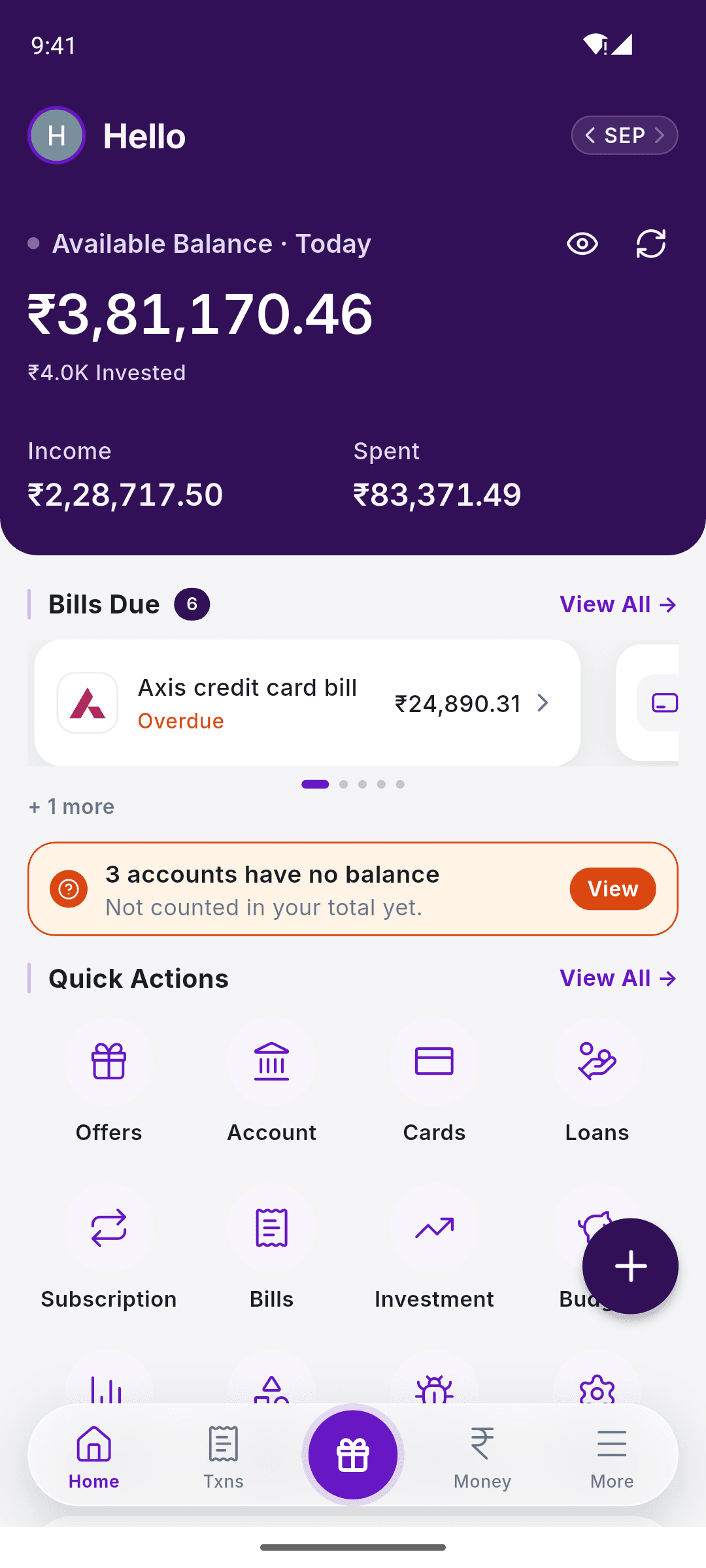
Automatically organise your spending, track expenses and understand where your money goes.