
Salary lands on the 1st. Rent goes on the 3rd, the bike EMI on the 5th, and by the 20th you are checking your balance before every Swiggy order. Most of us do not have a spending problem. We have a planning problem: the money has no job before it arrives.
A monthly budget fixes that. It is simply a plan, made once at the start of the month, that gives every rupee of your in-hand salary a place: fixed bills first, then savings, then everything else. Below you will find the five-step method and four complete budgets for in-hand salaries of ₹25,000, ₹40,000, ₹55,000 and ₹75,000, with every total checked.
If you want a quick rule of thumb instead, read our guide to the 50-30-20 budget rule for Indian salaries. This post is the hands-on version: real line items, real amounts.
Start with your in-hand salary, not your CTC
Your offer letter shows CTC. Your budget runs on the amount that actually reaches your bank account. The gap can be large. Your EPF contribution (12% of basic pay plus dearness allowance) is deducted before you see the salary. Some states also take professional tax; in Maharashtra, for example, most salaried people pay ₹200 a month and ₹300 in February. Then there is TDS if you are in the tax net.
The good news: under the new tax regime, a resident individual with total income up to ₹12 lakh pays no income tax because of the Section 87A rebate, and salaried people also get a ₹75,000 standard deduction. Every salary in this post is below that line. If you are not sure what your CTC turns into, use our CTC to in-hand calculator first.
One more point: your EPF is already saving for you. The savings line in the budgets below is extra money, on top of PF.
The five-step method
Step 1: List your fixed costs
These are the amounts that do not change much: rent, EMIs, insurance premiums, school or college fees, mobile and broadband plans, and money you send home. Write them down with their due dates.
Step 2: Pay yourself second
Fixed costs come first because they are not optional. Savings come next, before any spending. Set up an auto-debit for an RD or SIP on the 2nd or 3rd of the month, right after salary day. Money that leaves early does not get spent by mistake.
Step 3: Estimate your variable costs from real data
Groceries, fuel, cabs, eating out, shopping. Do not guess these. Look at last month’s bank SMS or UPI history and add them up. Most people underestimate eating out and small UPI payments by a wide margin.
Step 4: Keep a buffer
Something always comes up: a friend’s wedding gift, a phone screen, a doctor visit. A buffer of 3% to 5% of salary stops one surprise from breaking the whole plan. If it is unused at month end, move it to savings.
Step 5: Check it once a week
A budget you look at only on the 30th is just a record of what went wrong. A five-minute check every Sunday tells you while there is still time to slow down.

Four salary examples, from ₹25,000 to ₹75,000
Here are four sample budgets. They assume a single earner in a metro or large city. The ₹25,000 earner shares a flat; the others rent alone or with a partner and have a two-wheeler or small car loan. Change the amounts to fit your city, but keep the order: fixed costs, savings, then the rest.
| Item (per month) | ₹25,000 | ₹40,000 | ₹55,000 | ₹75,000 |
|---|---|---|---|---|
| Rent | ₹7,000 | ₹12,000 | ₹15,000 | ₹20,000 |
| Groceries and food at home | ₹5,000 | ₹6,000 | ₹8,000 | ₹10,000 |
| Electricity, mobile, broadband | ₹1,500 | ₹2,000 | ₹2,500 | ₹3,500 |
| Transport (fuel, metro, cabs) | ₹2,000 | ₹3,000 | ₹3,500 | ₹4,000 |
| EMI | ₹0 | ₹3,500 | ₹5,000 | ₹8,000 |
| Money sent home | ₹2,500 | ₹0 | ₹0 | ₹0 |
| Health and term insurance | ₹0 | ₹1,000 | ₹1,500 | ₹2,500 |
| Savings (RD, SIP, emergency fund) | ₹3,000 | ₹6,500 | ₹10,000 | ₹16,000 |
| Eating out, delivery, OTT | ₹1,500 | ₹2,500 | ₹3,500 | ₹4,500 |
| Shopping and personal | ₹1,500 | ₹2,000 | ₹3,500 | ₹4,000 |
| Buffer | ₹1,000 | ₹1,500 | ₹2,500 | ₹2,500 |
| Total | ₹25,000 | ₹40,000 | ₹55,000 | ₹75,000 |
₹25,000: protect the basics
At this level, rent and food take nearly half the salary (₹12,000 of ₹25,000). Savings of ₹3,000 is 12%. That is a real start. The first goal is an emergency fund of at least one month’s expenses, about ₹22,000, before any investing. Watch the small things: ₹40 chai-and-snack UPI payments on 22 working days add up to ₹880.
₹40,000: the first EMI test
This is often where the first loan arrives, usually a two-wheeler or a phone on EMI. Keep total EMIs low; here the ₹3,500 EMI is under 9% of salary. Add a basic health cover if your employer’s group policy is small. Savings rise to ₹6,500, or about 16%.
₹55,000: savings should cross ₹10,000
With rent at ₹15,000 and an EMI of ₹5,000, there is still room to save ₹10,000, about 18%. Split it: some into an emergency fund until it covers three to six months, the rest into a monthly SIP. Our SIP calculator shows what ₹5,000 a month can grow to over 10 years.
₹75,000: avoid lifestyle creep
The danger here is not running out of money. It is spending rises quietly to match income: a bigger flat, more orders, a new gadget. In this sample, ₹16,000 (over 21%) goes to savings first. A term plan is included in the ₹2,500 insurance line, because this is usually when people start to have dependents.
Track it without spending your evenings on it
A budget only works if you know your actual spends. You can do this by hand: at the end of each day, open your bank SMS and write each payment into a notebook or a sheet. It works, but most people stop after two weeks.
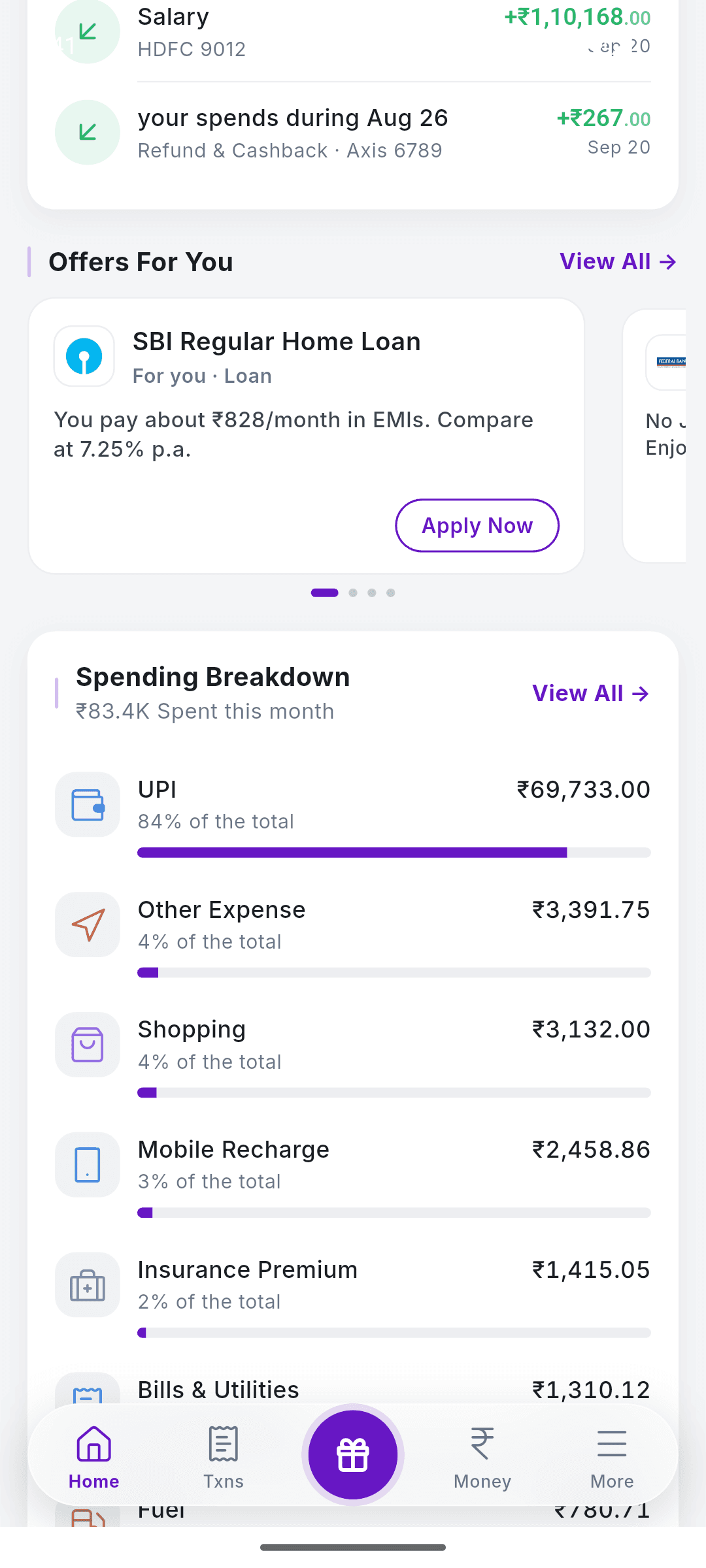
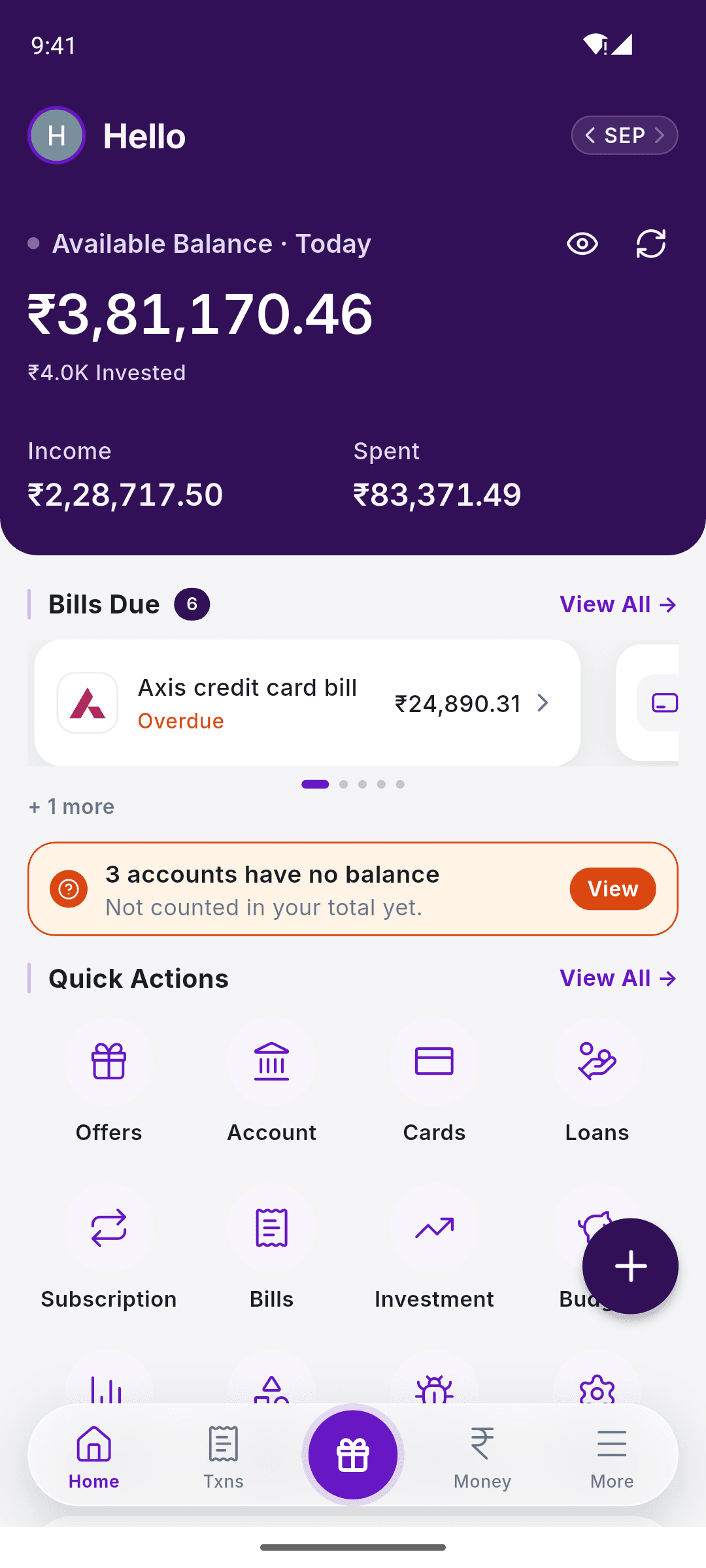
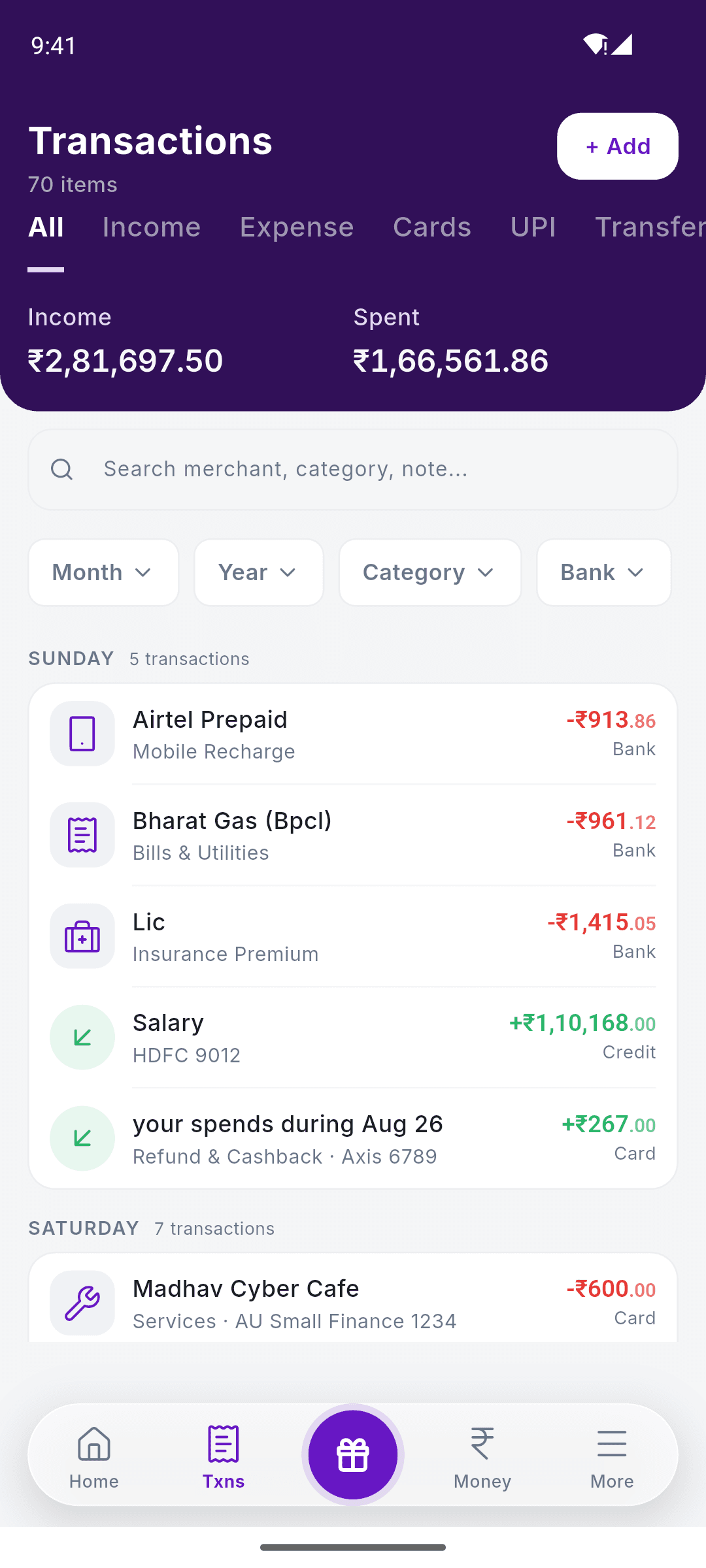
SkyloFin does this part for you. It reads the bank and card SMS on your phone, turns each one into a transaction with amount, shop and category, and shows spending by category every month. You set a budget per category and it warns you before you go over. It is free on Android, with no ads and no bank login. See how SkyloFin works.

Common mistakes that break a monthly budget
- Forgetting yearly costs. Insurance premiums, Diwali shopping and annual subscriptions do not show up every month. Divide them by 12 and save that amount monthly.
- Budgeting the bonus. Plan on your fixed in-hand salary only. Treat bonuses and incentives as extra.
- Making it too tight. A budget with zero for eating out will fail by the second weekend. Give fun a fixed, honest amount.
- Not counting cash. Cash spends never show up in bank SMS. Note them when they happen.
- Giving up after one bad month. The first two months are for learning your real numbers. Adjust, do not quit.
Frequently asked questions
How much of my salary should I save?
Aim for at least 10% to start, then raise it every time your salary goes up. In the examples above, savings rise from 12% at ₹25,000 to over 21% at ₹75,000. EPF is extra and does not count towards this.
Should I budget weekly or monthly?
Plan monthly, because salary, rent and EMIs are monthly. Check weekly, because spending on food, cabs and shopping happens daily. Dividing your variable budget by four gives you a simple weekly limit.
What if my rent is more than the examples?
Then something else has to shrink, usually eating out, shopping or the size of a new EMI. Try not to cut savings to zero. Even ₹1,000 a month keeps the habit alive.
Do I need an app to make a monthly budget?
No. A notebook or a spreadsheet works if you update it daily. An app like SkyloFin just removes the typing by reading your bank SMS automatically.
Ready to see where your salary actually goes? Get SkyloFin free on Android and let your bank SMS fill in the numbers for you.
Last checked: October 2026.
Updated 13 Oct 2026.