
Salary comes in on the first. By the twentieth, you are wondering where it went. You did not buy anything big. It just went, a little here and a little there.
That is the most common money problem there is, and it has a simple first fix: give every rupee a job before you spend it. The easiest way to do that is the 50-30-20 rule. It is not magic and it is not perfect, but it is simple enough to actually follow, which is more than most budgets manage.
What the 50-30-20 rule says
Take your take-home pay, the amount that actually lands in your bank account after tax, PF and other deductions. Then split it three ways:
| Share | For | Examples |
|---|---|---|
| 50% | Needs | Rent or home loan EMI, groceries, electricity, water, gas, phone and internet, commute, school fees, insurance premiums, minimum payments on loans |
| 30% | Wants | Eating out, food delivery, shopping, OTT subscriptions, movies, weekend trips, gadgets |
| 20% | Savings and paying off debt | Emergency fund, investments, extra payments on loans or card dues |
The rule was made popular in the book All Your Worth by Elizabeth Warren and her daughter Amelia Warren Tyagi. It works in India too, with a few adjustments we will come to.
A worked example
Say your take-home pay is ₹60,000 a month.
| Bucket | Share | Amount |
|---|---|---|
| Needs | 50% | ₹30,000 |
| Wants | 30% | ₹18,000 |
| Savings and debt | 20% | ₹12,000 |
That is the whole plan. You do not need to track every chai. You only need to know which bucket a spend belongs to, and roughly how full each bucket is.
Needs or wants? The honest test
A need is something you would still pay for if you lost your job next month. Rent, groceries, the electricity bill and your loan EMI pass that test. A second streaming app, a new phone when the old one works, and food delivery four times a week do not.
Some spends are half and half. Groceries are a need; imported cheese is a want. Commuting is a need; a cab when the metro would do is a want. Put the basic cost in needs and the upgrade in wants. You do not have to be strict, just honest.
When rent alone takes half your salary
In big cities, rent can easily cross 40% of take-home pay on its own, and then 50% for needs is not realistic. That is fine. The rule is a starting point, not a law. Two common adjustments:
- 60-20-20. Needs get 60%, wants shrink to 20%, savings stay at 20%. Savings is the bucket to protect.
- Fix the savings first, split the rest. Decide your savings amount, move it out on salary day, and let needs and wants share what is left.
If even 20% savings is not possible right now, start with 5% or 10%. A small amount you save every month beats a big plan you abandon in week two.
Put the savings first, not last
The most useful habit in personal finance has a simple name: pay yourself first. Most people spend through the month and save whatever is left, which is usually nothing. Flip the order. On salary day, move your savings share out before you spend anything.
You can set up a standing instruction or an automatic transfer to a separate savings account, or a recurring deposit, or an auto-debit to an investment. The account you do not see every day is the one you do not spend from. To see how a fixed monthly amount grows, try the recurring deposit calculator or the SIP calculator.
What the 20% should do first
- Pay off expensive debt. Credit card dues that you roll over cost around 3.5% a month on many cards, which is more than 40% a year. Clearing that is the best return you will ever get. See what paying only the minimum really costs.
- Build an emergency fund. Many people aim for three to six months of needs, kept somewhere safe and easy to reach, like a savings account or a fixed deposit.
- Then invest for goals. A home, a child’s education, retirement. What suits you depends on your goals and how long you can stay invested, so read up or speak to a qualified adviser before you choose.
Watch the small leaks
Budgets rarely fail on big spends. They fail on the small ones that repeat. Three worth checking every few months:
- Subscriptions. Go through your last three card and bank statements and list every amount that repeats each month. Cancel what you have not used.
- Food delivery. Add up one month of delivery orders. Most people are surprised by the total, not by any single order.
- Impulse shopping. A simple rule helps: leave anything non-urgent in the cart for a day or two. If you still want it, buy it from your wants bucket without guilt.
You cannot fix what you cannot see
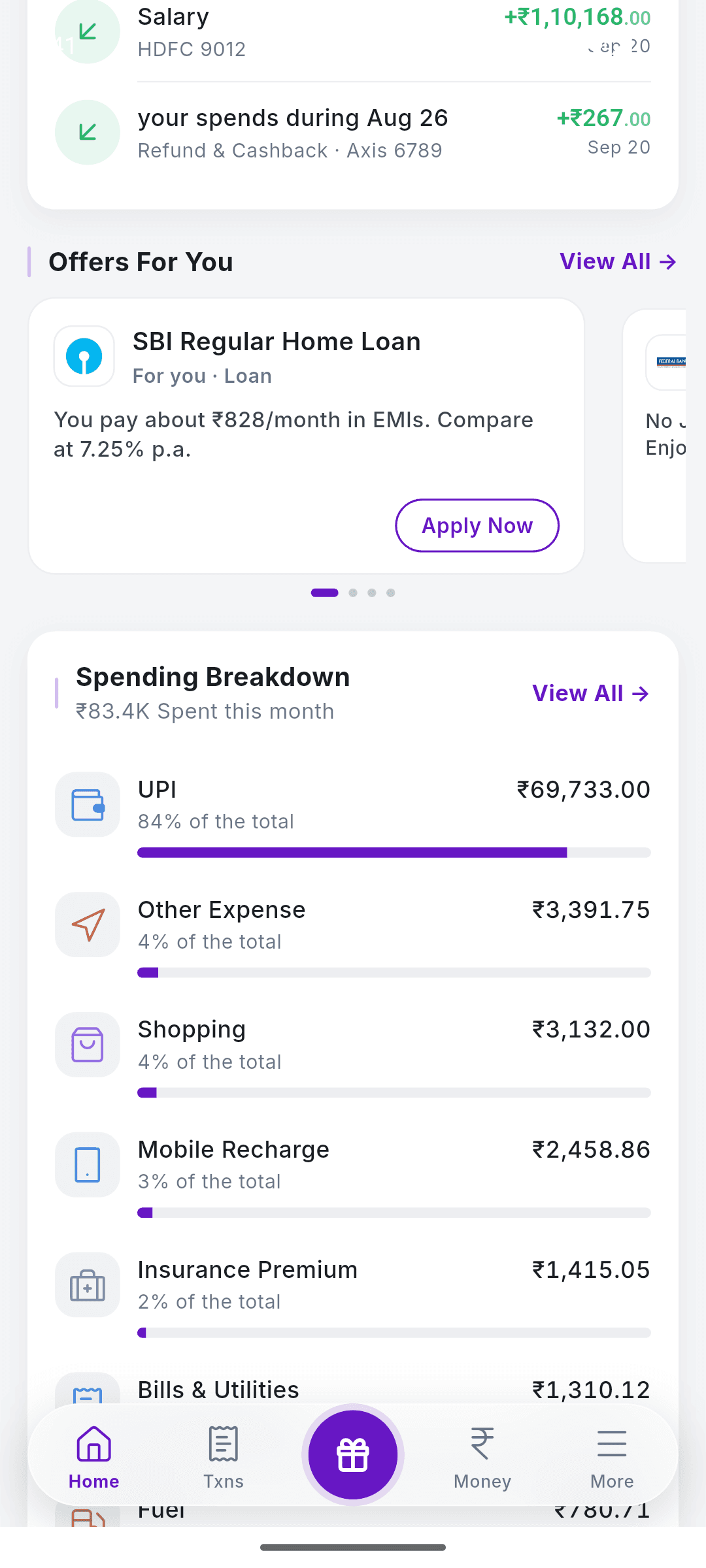
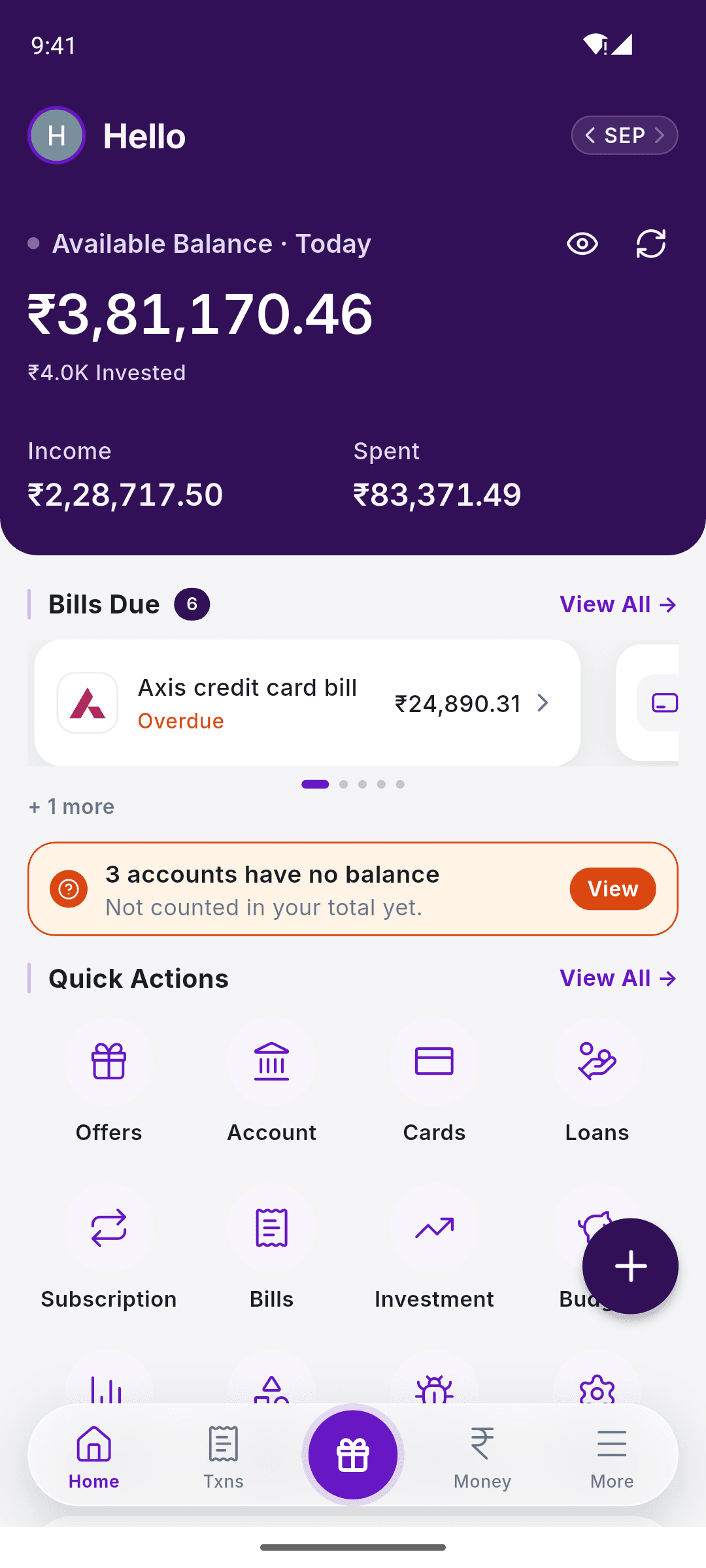
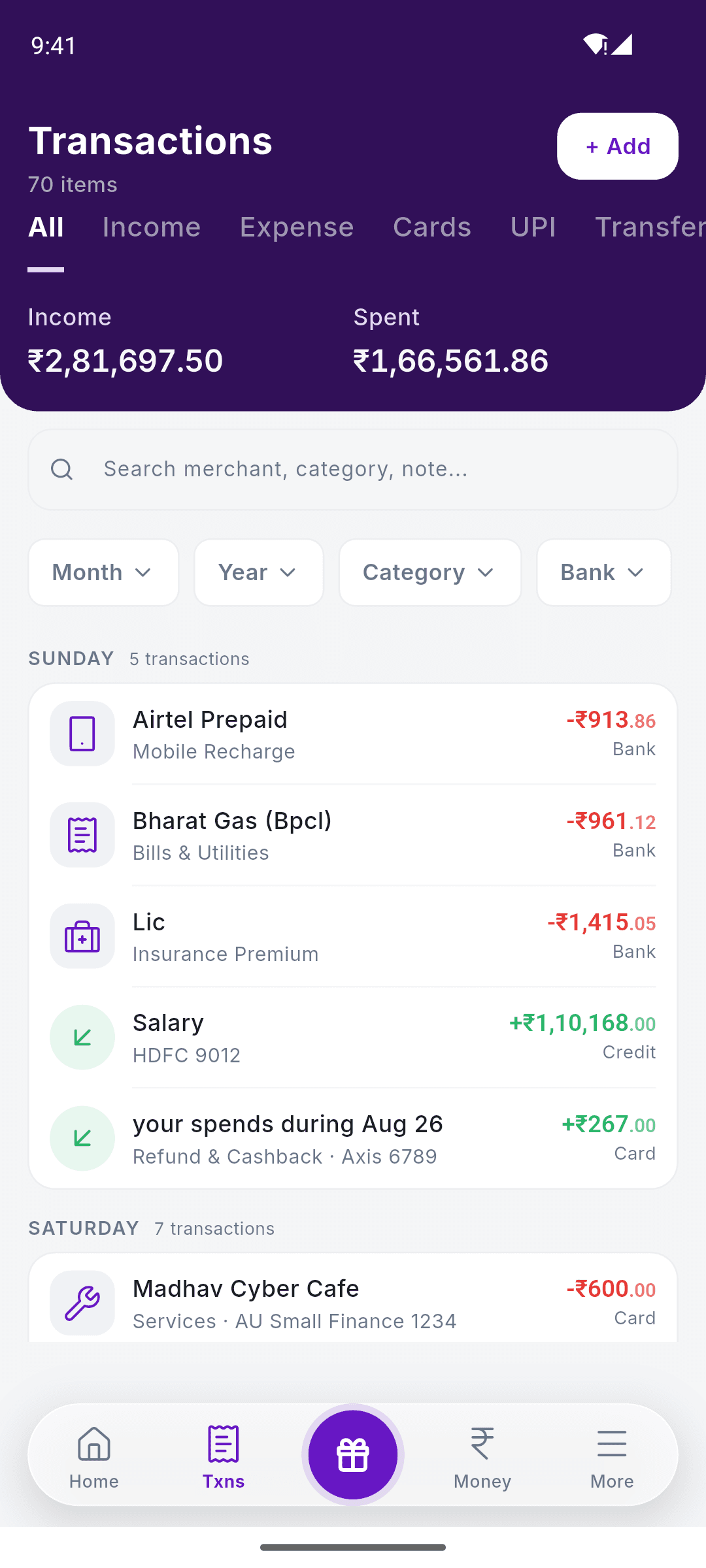
The hard part of any budget is not the maths, it is knowing where the money went. Most payments today are UPI, cards and auto-debits, and every one of them sends you an SMS. Those messages already hold your whole month: amount, date, and where you paid.
That is what the SkyloFin app does. It reads your bank’s transaction alerts on your phone, sorts each payment into a category like food, bills or shopping, and shows your month at a glance, without a bank login. Your transactions stay on your phone, with an encrypted backup in your own Google Drive. A notebook or a spreadsheet works too; what matters is that you look at the numbers once a week.
A simple monthly routine
- On salary day, move your savings share out first.
- Pay the fixed needs: rent, EMIs, bills. Set autopay where you can.
- Once a week, check how full the wants bucket is.
- At month end, compare what you planned with what happened, and adjust next month’s split.
- Every three months, go through subscriptions and repeat payments.
Frequently asked questions
Should I use gross salary or take-home pay?
Take-home pay: the amount that reaches your account after tax, PF and other deductions. That is the money you can actually spend.
Does a home loan EMI count as a need?
Yes. Minimum payments on any loan are needs. Anything you pay above the minimum to clear a loan faster comes from the 20% savings and debt bucket.
What if my income changes every month?
Budget on your lowest usual month. In a better month, send the extra to savings or debt first.
Is 50-30-20 right for everyone?
No rule fits everyone. Treat it as a starting point and adjust it to your city, family and goals. The part worth keeping is saving first and knowing where your money goes.
This is general information, not financial advice. For decisions about investing or debt that depend on your situation, speak to a qualified adviser.
Updated 3 Oct 2026.