
“Bhai, ₹2,000 de de, salary aate hi lauta dunga.” Every Indian has heard this line, and most of us have said it too. Lending small amounts to friends, cousins and colleagues is normal here. It is part of how we look after each other.
The trouble is not the lending. The trouble is memory. Three months later you are not sure if it was ₹2,000 or ₹2,500, whether he already returned half by UPI, and whether it was before or after the Diwali party. Asking feels awkward, so you stay quiet, and the money quietly disappears.
The answer is to write down every udhar the day it happens, with three details: who, how much, and which way the money went. Do that, and you will never lose track again, whether you use a notebook, a phone note or an app.
What counts as udhar
Udhar is any money that has to come back, or go back, between two people. It is different from a gift and different from a shared bill.
| Situation | Is it udhar? |
|---|---|
| You lend a colleague ₹1,500 for a train ticket | Yes, he owes you |
| Your cousin pays your ₹800 phone bill | Yes, you owe her |
| You pay ₹3,000 for a dinner that four people shared | Usually a split, not udhar |
| You give your sister ₹5,000 for her birthday | No, that is a gift |
| A friend pays your share of the cab | Yes, small, but it is udhar |
A shared dinner is better handled as a split, where everyone pays their share. We cover that in our guide on splitting trip expenses. Udhar is the one-to-one money between you and one person.
The three details to write down

- Who. The person’s full name, not “Rahul” if you know three Rahuls.
- How much and when. The exact amount and the date. “₹2,000 on 12 Nov” is clear. “Some money last month” is not.
- Which way. I gave, or I got. Most mix-ups come from forgetting this one.
Add a short note if it helps you remember why: “train ticket to Pune”, “hospital bill”, “rent short this month”. The note is what makes asking easy later, because it reminds the other person too.
Keep both directions in one place
People are careful about money they lent and careless about money they borrowed. That is human, but it is also how friendships get strained. When your list shows both sides, you see the real picture.
| Person | I gave | I got | Net |
|---|---|---|---|
| Rahul | ₹2,000 | ₹0 | He owes you ₹2,000 |
| Sneha | ₹500 | ₹1,200 | You owe her ₹700 |
| Imran | ₹3,000 | ₹3,000 | Settled |
The net column is what matters. If Sneha lent you ₹1,200 and borrowed ₹500, you owe her ₹700, not ₹1,200. Keeping both directions stops you from paying someone who already owes you.
When money comes back, mark it right away
Most udhar is now returned by UPI, and part payments are common: ₹1,000 now, ₹1,000 next week. Each time money comes back, update the list that day. If you wait, you will not remember whether the ₹1,000 on Google Pay was this udhar or the movie tickets.
A simple habit: when you see a UPI credit from a friend’s name, ask yourself “is this udhar coming back?” before you do anything else. If yes, mark it.
Doing it in an app
A notebook works if you lend once or twice a year. If you lend often, or you are the friend everyone asks, an app keeps the list for you and reminds you when it is time to ask.
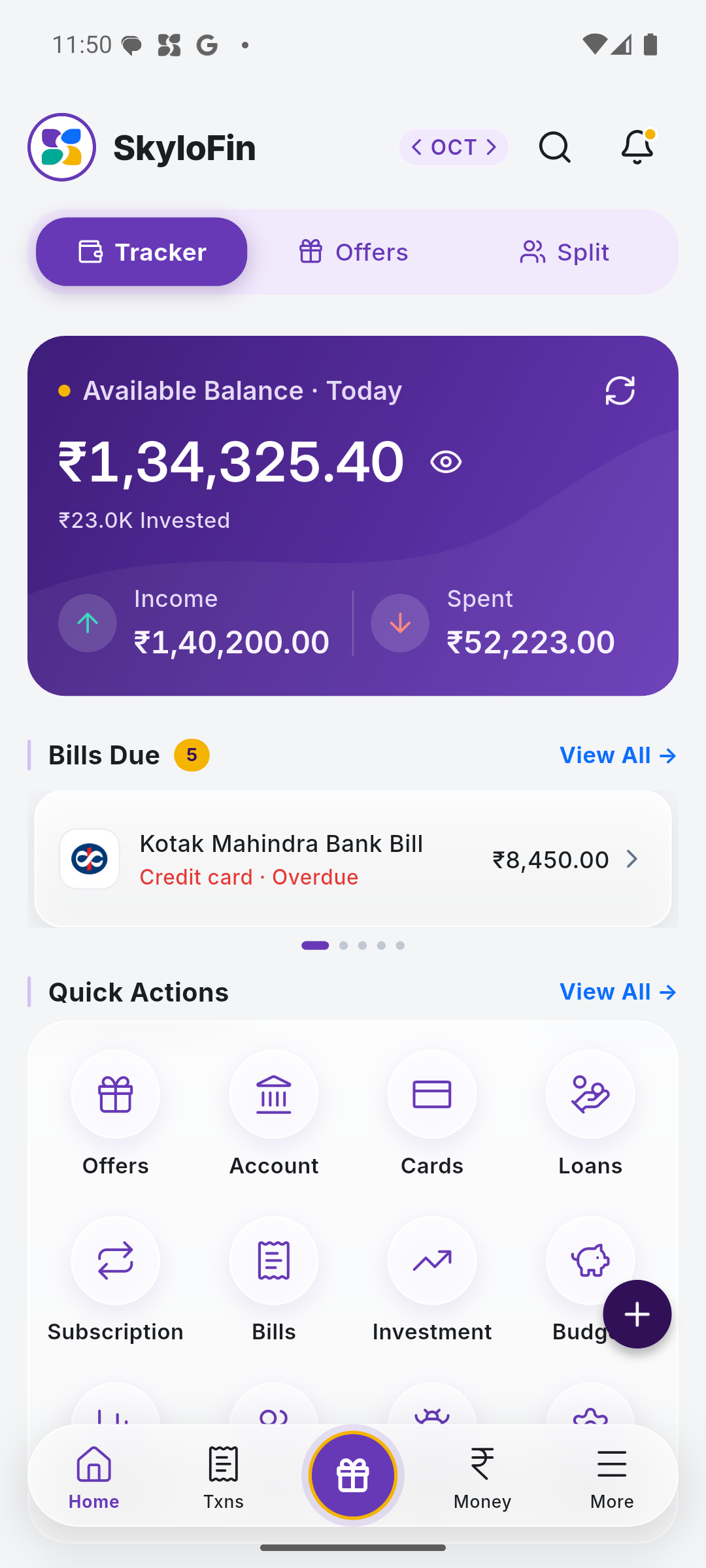
SkyloFin has Udhar built in. You add “I gave” or “I got”, the person, the amount and a note. You can set a reminder after 3, 7 or 14 days, so you remember to ask before it is forgotten. And because the app already reads your bank SMS, when a friend pays you back by UPI it can ask “Is this Rahul paying you back?” and mark the udhar paid with one tap. See how Udhar works.

Udhar is kept apart from your spending. Cash you lend is recorded as Lent Money, a transfer, not an expense. Money a friend pays back is filed as Lent Returned, not as income. So your monthly spending and income stay honest.
SkyloFin is free on Android, with no ads and no bank login. Get the app.
Asking for it back, the easy way
Most people do not refuse to return money. They forget, or they assume you forgot. A clear, friendly message fixes most of it. Compare these two:
| Vague | Clear |
|---|---|
| “Bro, that money?” | “Hey Rahul, the ₹2,000 for the Pune ticket on 12 Nov. Can you send it by Sunday?” |
| “You still owe me something na?” | “Sneha, it was ₹1,200 for the cab and dinner. UPI to this number whenever you can this week.” |
The clear version names the amount, the reason and a date, and it makes paying easy by giving the UPI ID or number. Nobody has to feel embarrassed, because the message is about a fact you both remember, not about trust.
Send it once, then wait a few days. If the reminder in your list fires again, send one more message with the same details. Two polite messages are usually enough.
How much udhar is too much?
There is no fixed rule, but a few simple limits keep lending friendly:
- Lend only what you can live without. If losing it would hurt your rent or EMI, the amount is too high.
- One open udhar per person. If someone has not returned the last one, think twice before the next.
- Large amounts get a message in writing. For anything above a month’s grocery bill, a short WhatsApp message (“Sending ₹20,000, you will return by March”) avoids confusion later.
- Family is still udhar. It is fine to forgive a family loan, but decide that consciously instead of forgetting.
If you often lend from your savings, check your monthly cash flow too. Our 50-30-20 budget guide helps you see how much spare money you really have each month.
Frequently asked questions
How do I keep track of money I lent to friends?
Write down the person, the amount, the date and whether you gave or got the money, the same day. Update it every time part of it comes back.
Should udhar show up in my monthly expenses?
No. Lending is not spending, because the money is meant to come back. Keep it in a separate list so your expense totals stay accurate.
What if a friend returns the money in parts?
Mark each part as it arrives and keep the rest open. The list should always show what is still pending.
How do I remind a friend without being rude?
Mention the note you wrote (“the ₹2,000 for the Pune ticket”) and suggest a date. A specific, friendly message works better than a vague one.
Updated 20 Nov 2026.