
Salary lands on the 1st. Rent goes on the 5th. Somewhere in between, your credit card bill falls due on a date you only half remember. Miss it by a few days and you pay a late fee, lose your interest-free period and risk a mark on your credit report that lenders will see for years.
The direct answer: stop relying on memory. Build three layers. An auto-debit that pays at least the minimum due, a reminder a few days before the due date for the full amount, and a due date that sits just after your salary arrives. Any one layer can fail. All three together almost never do.
Below is how each layer works, what RBI’s rules actually say about late payments, and a simple monthly routine you can follow with or without an app.
What RBI’s rules say about a late credit card payment
The Reserve Bank of India sets rules that every card issuer must follow. They don’t make paying late free, but they tell you exactly where the line is.
- Enough time to pay. Issuers must send your statement without delay and give you at least a fortnight to pay before interest starts.
- The 3-day buffer. An issuer can report your account as ‘past due’ to credit bureaus, or charge a late fee, only when it stays past due for more than three days. The days are counted from the payment due date printed on your statement.
- Late fee on what is unpaid. Late payment charges apply only to the amount still outstanding after the due date (adjusted for payments and refunds), not to the total bill.
- You can move your billing cycle. Issuers must let you change the billing cycle at least once.
- Minimum due keeps you current. Paying the minimum amount due stops the bill being treated as overdue. If the minimum due stays unpaid for 90 days from the due date, the bank treats the account as a non-performing asset, which is serious damage to your credit record.
Read the 3-day buffer carefully. It is a cushion for a payment that got delayed on the way, not a grace period to plan around. Interest is a separate matter. If you pay less than the full amount, you pay interest on the rest, and on most cards you also lose the interest-free period on new purchases. Your card’s most important terms and conditions list the exact rate. Our guide to what paying only the minimum due really costs shows the numbers.
| What you paid by the due date | Late fee? | Interest? | Credit report |
|---|---|---|---|
| Full amount due | No | No | Clean |
| Minimum due, not the full bill | No | Yes, on the unpaid part | Clean |
| Nothing, paid 1 to 3 days late | No (RBI 3-day rule) | Yes | Not reported as past due |
| Nothing for more than 3 days | Yes, on the outstanding | Yes | Can be reported as past due |
| Minimum due unpaid for 90 days | Yes | Yes | Account becomes NPA |
Layer 1: an auto-debit as your safety floor
The strongest protection is a payment that happens even if you forget. Most banks let you set up auto-debit for your credit card bill from a savings account. You pick the amount: the minimum amount due or the total amount due.
If the card and the savings account are with the same bank, this is usually a few taps in net banking or the bank’s app. For a card from a different bank, you can set up an e-mandate or, where your bank supports it, a UPI AutoPay mandate. Under RBI’s rules for recurring e-mandates, credit card bill payments of up to ₹1,00,000 can go through without a fresh OTP each time.
Which amount should you choose? If your savings account reliably holds more than your card bill, choose the total amount due and you will never pay interest. If your balance swings a lot, choose the minimum due. It works as a floor that protects your credit report, and you pay the rest by hand.
One warning. An auto-debit that fails because the account is short can cost you twice: a bounce charge from your bank and a late fee on the card. Keep a buffer of at least one month’s typical card bill in the linked account.
Layer 2: a reminder that arrives before the due date
A reminder on the due date is too late if you pay by a method that takes a day to reach the card. Set two reminders instead: one five days before the due date, and one a day before.
The manual way: when the statement SMS or email arrives, open your phone calendar and add an event on the due date with two alerts. Write the card name and the full amount in the title, for example “HDFC card ₹18,450 due”. It takes 30 seconds, but only if you do it every single month.
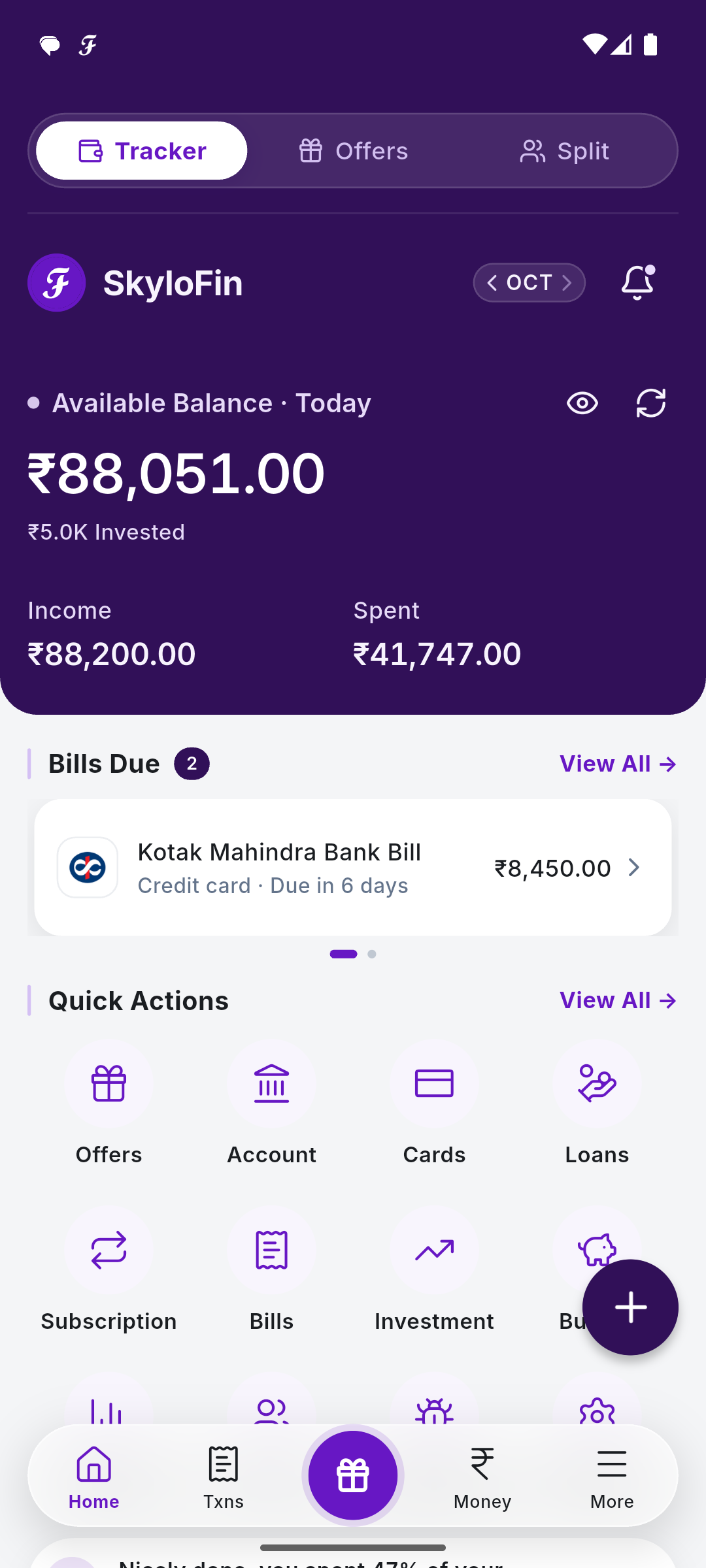
The automatic way: SkyloFin reads your card statement SMS on your phone, picks up the amount and due date, and reminds you before the bill is due. You mark it paid once the money goes. It needs no bank login, and the data stays on your phone. See how bills and reminders work in the app guide.

If you’d like the reminders without the calendar work, SkyloFin is free on Android, with no ads and no bank login.
Layer 3: put the due date right after salary day
Many missed payments are not forgotten payments. The money just wasn’t there yet. If your salary comes on the 1st and your card is due on the 28th, you are paying from the last, thinnest days of the month.
Fix this with the billing cycle change RBI requires issuers to offer. Ask your bank, through its app, net banking or customer care, to move the cycle so the due date falls three to seven days after your salary credit.
| Card | Old due date | Salary date | New due date | Why it works |
|---|---|---|---|---|
| Card A | 28th | 1st | 6th | Salary arrives 5 days before the bill |
| Card B | 15th | 1st | 7th | Both cards paid in the same first week |
With two or more cards, bunching the due dates into the same week means one sitting at the start of the month covers everything.
Pay early enough for the money to land
Paying on the due date is not always the same as paying on time. A payment made through the card issuer’s own app or net banking usually reflects quickly. Payments made from another bank’s account, or through a third-party app, can take longer to credit. Your issuer’s website lists how long each method takes.
The safe habit: pay two to three days before the due date and keep the payment reference number until the payment shows on the card. If there is ever a dispute, that reference is your proof.
A 10-minute monthly routine
- When the statement arrives, check the total due, the minimum due and the due date.
- Scan the transactions for anything you don’t recognise, such as a renewal or a duplicate charge.
- Check that the auto-debit account has enough money for the amount you chose.
- Pay the full amount two to three days early if you can.
- Note the payment reference and mark the bill paid.

If you carry a balance this month, our credit card interest calculator shows what it will cost before you decide how much to pay.
Already missed it? Do this today
- Pay right away. If you are within three days of the due date, paying now keeps you inside RBI’s buffer for late fees and credit reporting.
- Pay at least the minimum due if you cannot pay the full bill, and the rest as soon as you can.
- Call your card issuer if a late fee was charged and this is your first slip. Some issuers waive it as a goodwill gesture, though they don’t have to.
- Check your next statement to make sure the payment and any reversal show up.
- Check your credit report a month or two later. Our guide to a good CIBIL score and how to raise it explains how one late entry affects you.
Frequently asked questions
Is there a grace period after the credit card due date?
RBI rules say an issuer can charge a late fee or report you as past due only when the account stays past due for more than three days after the due date on your statement. Interest may still apply, so treat it as a cushion, not extra time.
Does paying the minimum amount due avoid the late fee?
Yes. Paying the minimum due by the due date avoids the late fee and keeps your credit report clean. You still pay interest on the unpaid part.
Can I change my credit card due date?
Yes. RBI requires issuers to let you change your billing cycle at least once. Ask through your bank’s app, net banking or customer care.
Will auto-debit pay my bill if the due date falls on a holiday?
This depends on your bank’s process. Check your card’s terms, and keep money in the linked account a few days before the due date so a holiday never matters.
Does SkyloFin pay my credit card bill?
No. SkyloFin does not make payments or move money. It reads your card statement SMS, reminds you before the due date and lets you mark the bill paid. You pay through your bank or card app as usual.
Your due date is a fixed point every month. Put three layers around it and it stops being something you need to remember. To get the reminders set up from your SMS in a few minutes, download SkyloFin free on Android.
Last checked: October 2026.