Is the SBI IRCTC Platinum Credit Card Worth It?
Enter what you spend where this card pays more, and the benefits you would use. See what it is worth to you in rupees, after its fee.
- 207Cards to check
- FreeCost
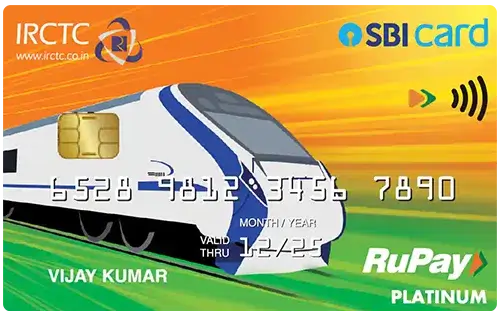
- Travel card
- ₹590 fee a year (with GST)
- 0.8% on most spends; 8% only at partner merchants
- Some lounge visits a year
- Pays in reward points
- travel only at IRCTC: 8% back
- flyers: some airport lounge visits a year
- you spend less than ₹6,500 a month: below that the ₹590 fee costs more than the rewards
- most of your spending is fuel, rent, wallet top-ups or government payments: those earn nothing on this card
- you pay mostly by UPI: a Visa or Mastercard card cannot pay by UPI
- you rarely spend on IRCTC: the 8% rate applies only there, everything else earns 0.8%
- you often pay in foreign currency: 3.5% is added to every foreign spend
Your spend a month, by kind
Terms on the normal rate: 1 Reward Point per ₹125 (~0.8%) on non-fuel retail purchases. SBI sweeps the whole point balance to your IRCTC loyalty account monthly, where 1 point is worth ₹1 against a ticket, so the ₹1 rate is the one that applies, but only if you actually book AC rail. Fuel and cash spends excluded.
Total on the card: ₹0 a month
Abroad and benefits
Every rate on this card, and what your spend earns
| Spend category | Rate | Monthly cap | Where it applies | Your spend earns |
|---|---|---|---|---|
| UPI payments (scan and pay) | Earns nothing | - | a Visa or Mastercard card cannot pay by UPI | - |
| Online shopping | 0.8% | No cap | The card's normal rate | - |
| Dining and food delivery | 0.8% | No cap | The card's normal rate | - |
| Groceries | 0.8% | No cap | The card's normal rate | - |
| Travel: flights, hotels, trains | 0.8% | No cap | Anywhere else in the category | - |
| Travel: flights, hotels, trains, only at listed merchants | 8% | No cap | Only at: IRCTCTerms: 10 Travel Reward Points per ₹125 (8%) on AC-class IRCTC tickets booked at irctc.co.in; 1 point = ₹1 against a ticket, credited 5 days after travel. SBI markets it as "up to 10%" and its own back-of-booklet FAQ says 10 per ₹100; the Travel Reward Point Calculation clause governs. | - |
| Fuel | Earns nothing | - | earns nothing on this card | - |
| Bills and recharges | 0.8% | No cap | The card's normal rate | - |
| Rent | Earns nothing | - | earns nothing on this card | - |
| Insurance premiums | 0.8% | No cap | The card's normal rate | - |
| School and college fees | 0.8% | No cap | The card's normal rate | - |
| Wallet top-ups | Earns nothing | - | earns nothing on this card | - |
| Taxes and government payments | Earns nothing | - | earns nothing on this card | - |
| Spend abroad or in a foreign currency | 0.8% | No cap | The card's normal rate | - |
| Everything else | 0.8% | No cap | The card's normal rate | - |
Card data sourced via CardAdvisor.in, India Credit Card Facts, CC BY 4.0, adapted by SkyloFin.
Common Questions
When is a credit card worth its annual fee?
When the rewards you actually earn in a year are more than the fee plus 18% GST, or when you spend enough for the bank to waive the fee. This calculator works out both from the card's own published terms.
Why is GST added to the fee?
Card fees carry 18% GST, so a ₹1,000 fee costs ₹1,180. Where the bank already quotes the fee with GST, it is not added twice.
What does 'capped' mean?
Many cards limit the reward you can earn in a month in a category. Spending above the cap earns nothing extra, so the calculator stops counting there.
Is a lifetime free card always better?
Not always. A paid card with higher rewards can leave you with more once you spend enough. The break-even line shows the monthly spend where that starts.