
You open an account, forget about it for a few months, and then see a charge for “non-maintenance of minimum balance”. It is one of the most common complaints about banks in India, and it is almost always avoidable.
The fix is to open the right kind of account for how you actually use it. This guide explains the difference between a zero balance account and a regular savings account, what the rules guarantee you, and how to pick in five minutes.
What “minimum balance” really means
Most regular savings accounts ask you to keep an average monthly balance. It is not the balance on one day. The bank adds up your balance at the end of every day in the month and divides by the number of days. If that average falls below the bank’s minimum, you pay a charge.
That is why a large deposit at the end of the month does not always help. If your account sat nearly empty for three weeks, one big deposit on the 28th only lifts the average a little.
RBI’s rules also say a bank must tell you before charging, give you time to top up, and keep the charge in proportion to the shortfall. It is not allowed to push your balance below zero just to collect it. Several public sector banks, including SBI, have gone further and stopped charging for a low balance on regular savings accounts altogether.
What is a zero balance account?
A zero balance account has no minimum at all. Your balance can sit at ₹0 for a year and you will not be charged for it. There are two kinds, and the difference matters.
1. The basic account every bank must offer
RBI requires every bank to offer a Basic Savings Bank Deposit Account. It exists so that nobody is kept out of banking for not having money in the bank. What the rules guarantee on it:
- No minimum balance, ever.
- Free deposits, as many as you like.
- At least four withdrawals a month free, including ATM withdrawals.
- A free ATM or debit card.
- The same interest rate as the bank’s other savings accounts.
The catch: if you hold a basic account at a bank, you usually cannot also hold a regular savings account at the same bank.
2. Digital zero balance accounts
Many banks now offer accounts you open on your phone with a video call for KYC, with no minimum balance. These are often the easiest way to get a zero balance account today. They can come with limits or small charges, for example for a physical debit card, and some ask you to complete full KYC within a set time. Read the bank’s own charges page before you open one.
What a regular savings account gives you
Regular accounts ask for a minimum balance because they are designed to be your main account. In return they usually offer more:
- A wider choice of debit cards, sometimes with offers or insurance cover.
- More free branch and ATM transactions.
- A cheque book, and sometimes a relationship manager at higher balances.
- Easier access to the bank’s loans, credit cards and fixed deposits.
Whether that is worth keeping money locked up to meet a minimum depends on how you bank.
A side-by-side view
| Zero balance account | Regular savings account | |
|---|---|---|
| Minimum balance | None | Usually an average monthly balance |
| Charge for a low balance | Never | Often, unless the bank has dropped it |
| Free withdrawals | Basic account: at least 4 a month | Usually more |
| Debit card | Basic account: free | Several types, some with fees |
| Cheque book | Sometimes limited | Usually included |
| Interest rate | Same rules as other savings accounts | Bank’s savings rate |
| Deposit insurance | Up to ₹5 lakh per bank (DICGC) | Up to ₹5 lakh per bank (DICGC) |
Is my money safe in a zero balance account?
Just as safe as in any other savings account at the same bank. Deposits at banks in India are insured by the DICGC, a subsidiary of RBI, up to ₹5 lakh per depositor per bank. That covers savings, current and fixed deposits together, and it does not depend on the account type.
If you keep more than ₹5 lakh, spreading it across two banks keeps all of it within the cover.
How to choose, in five questions
- Will your balance often drop close to zero? If yes, a zero balance account saves you from charges you would otherwise pay again and again.
- Is this your salary account? Salary accounts usually have no minimum while your salary keeps coming in. If you change jobs, ask the bank what happens to the account.
- Do you use a branch? If you do everything on your phone, a digital zero balance account is enough. If you need a cheque book and the branch often, a regular account fits better.
- Do you want a loan or credit card from the same bank later? A regular account with a steady history can help there.
- How many accounts do you really use? Every idle regular account is a charge waiting to happen. Close the ones you do not need, in writing, and keep the confirmation.
Before you open any account
- Read the bank’s schedule of charges: minimum balance, debit card fee, SMS alerts, extra ATM withdrawals.
- Check the interest rate and how often it is paid.
- Turn on SMS alerts for every debit, so no charge ever surprises you.
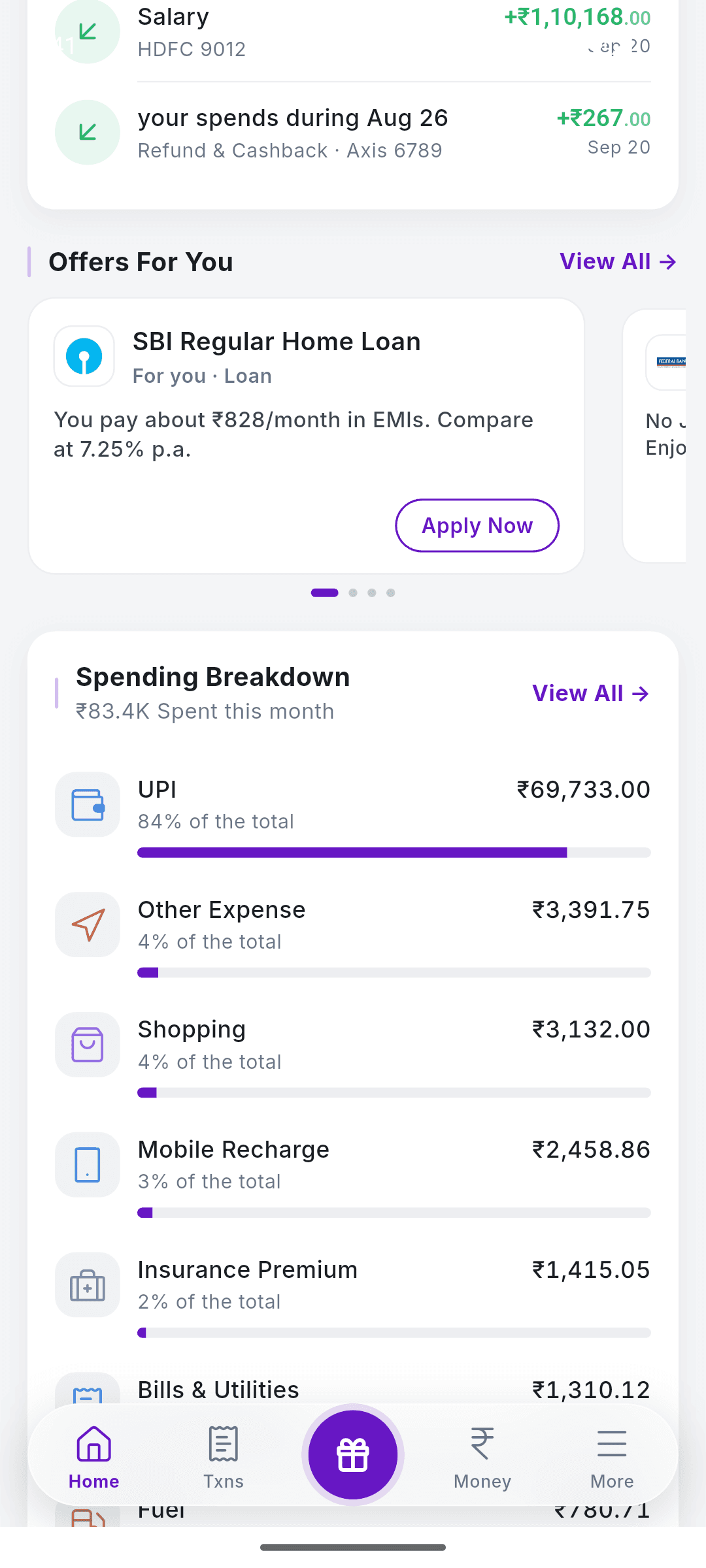
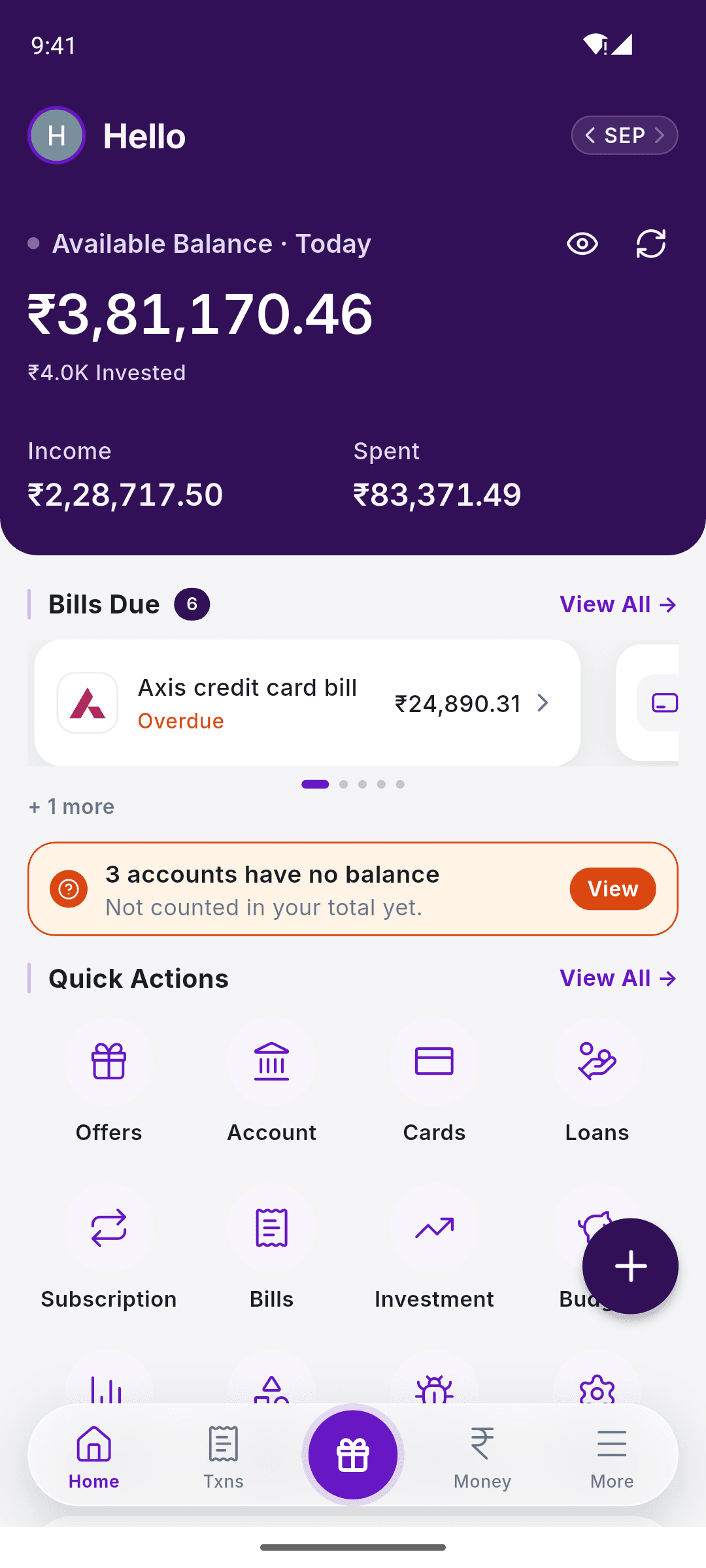
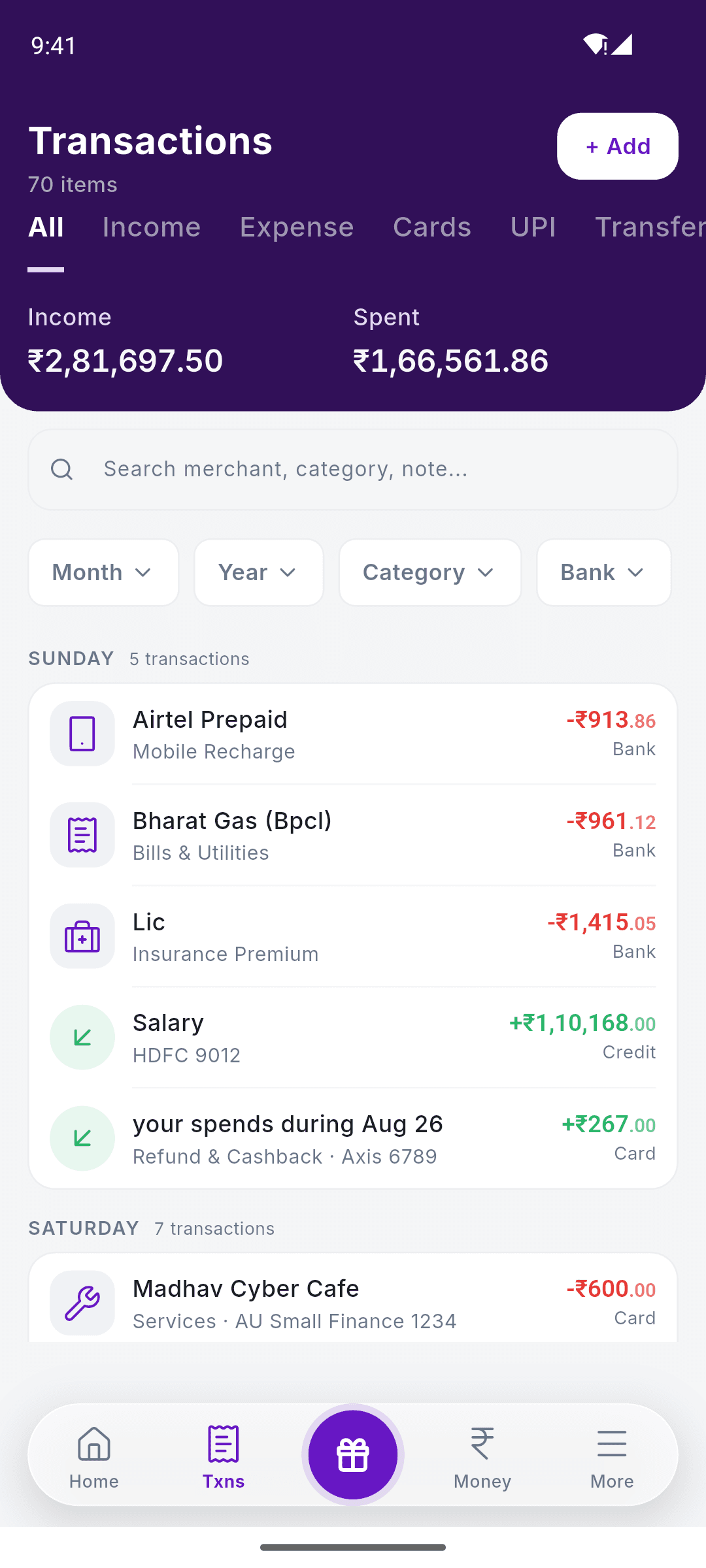
You can compare zero balance and regular accounts, with their charges side by side, on our savings accounts page. If you want to see every debit and charge across all your accounts in one place, the SkyloFin – Expense Tracker reads your bank’s SMS on your phone and sorts them for you.
Frequently asked questions
Can a bank charge me for a low balance on a zero balance account?
No. A zero balance account has no minimum, so there is nothing to charge for. Other charges, like a debit card fee, may still apply; they are on the bank’s schedule of charges.
Can I have a zero balance account and a regular account at the same bank?
Usually not if it is the basic account RBI requires banks to offer. Digital zero balance accounts have their own rules; ask the bank.
Do zero balance accounts pay less interest?
Not because they are zero balance. Interest depends on the bank’s savings rate; check it before you open the account.
Is a zero balance account covered by deposit insurance?
Yes. DICGC covers up to ₹5 lakh per depositor per bank, whatever the account type.
This is general information to help you compare, not financial advice. Charges and features change, so check the bank’s own terms before you open an account.